Attraction
Boten Local Market — where daily Lao life happens
For the real Boten — the everyday food, faces and rhythms of the town — skip the mall and head for the local market.
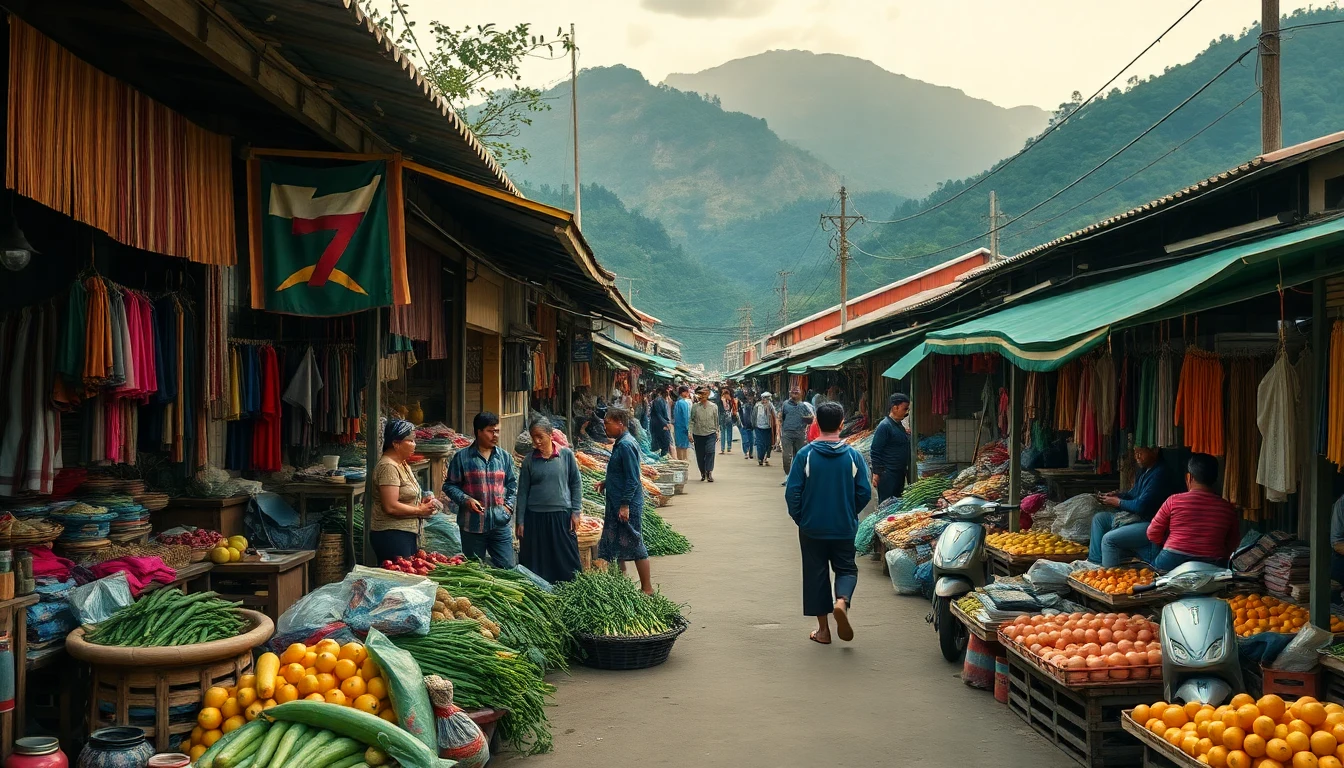
Distinct from the Boten Duty-Free Mall, the Boten Local Market sits in older Boten village, away from the polished SEZ core and closer to the rhythms of pre-2016 Boten. It opens early — produce stallholders set up by 06:00 — and is at its liveliest between 07:00 and 10:00, when villagers from the surrounding hills bring in their morning harvest, prepared food vendors hit peak service, and the cross-border buyers and Lao residents do their daily shopping.
By midday, most of the wet-goods stalls have closed and the market quiets down considerably. For visitors who want to see actual Boten — not the duty-free version — the local market is essential. It's also the cheapest way to eat well in town, with a string of food stalls serving genuine Lao cooking at street prices.
What you'll find
The market is organised loosely by category, with overlap at the edges:
- Fresh produce — Vegetables, herbs, fruit, much of it grown in the villages surrounding Boten and across the border. Bananas, pomelos, papayas, custard apples, and the bitter local greens used in Lao cooking.
- Live and dressed meat — Chicken, pork, the occasional duck. Bring an open mind; everything is fresh.
- Freshwater fish — Catfish, tilapia, and small wild-caught river fish from the Nam Ha drainage.
- Rice and rice products — Sticky rice in banana leaves, dried rice noodles, rice flour, the various fermented-rice products central to Lao cooking.
- Dried and fermented food — Sausages, fish, vegetables, padaek (the strong fermented fish paste central to northern Lao flavour profiles).
- Cooked-food stalls — The reason many visitors come. Khao soi (the northern Lao noodle soup), tam mak hung (papaya salad), grilled meats, sticky rice with various dipping sauces, fried snacks.
- Spices, chillis and salt — Bulk staples plus the regional specialty spices used in laap and other northern dishes.
- Textiles and clothing — Traditional Lao silk weaves from the surrounding villages, plus everyday clothes for the local population.
- Traditional remedies — Herbal medicines, bark and root preparations used by Hmong and Khamu communities.
What to try (and bring small kip)
Mornings are best — go on an empty stomach. The standout snacks are:
- Khao soi — The Lao version (very different from Thai khao soi). Wheat noodles, minced pork sauce, fermented soya bean, fresh herbs.
- Grilled meats — Pork or chicken, often with sticky rice and a chilli-lime dipping sauce.
- Khao niaw — Sticky rice in bamboo or banana-leaf packets, often paired with grilled or dried meats.
- Fried snacks — Crisp banana fritters, sweet potato fries, freshly fried prawn crackers.
- Lao coffee — Several stalls serve strong Lao-grown coffee in condensed-milk style.
Carry small kip notes (1,000, 2,000, 5,000) — most stalls don't accept cards, and very few accept yuan even though Boten as a whole is bilingual. Expect to spend US$2–4 per person for a full breakfast.
Practical tips and etiquette
- Bring small kip notes — Few stalls have change for large bills.
- Go early — The 7am–9am window is the market at its best.
- Go on an empty stomach — There's more good food than you'll have appetite for.
- Photography — Generally fine but always ask before photographing people, especially older villagers and stallholders. A friendly "sabai dee" (hello) goes a long way.
- Bring a reusable bag — Plastic-bag reduction is encouraged in Lao PDR.
- Dress modestly — Shoulders and knees covered. This is a working market, not a tourist attraction; respect the everyday context.
- Try one thing you don't recognise — The market is the best place to discover something new about Lao food.
For more on the broader food scene, see our Boten restaurants guide.
→ See also: All Boten attractions · Hotels in Boten · Boten restaurants